See what’s new
We gave the CUX app a fresh new look. Experience metrics widget got an upgrade: You can now click ‘View More’ to open a full list of all pages where the selected pattern occurred, complete with device type and event counts.
Check details in the video
The Rage Click widget displays the number of visits during which a Rage Click was detected. A Rage Click occurs when a visitor clicks several times in a very short time span. A Rage Click can be an indicator of the user being frustrated or confused by the design of your website.
Example In this example, you can see that a Rage Click was detected in 1.66% of all visits. Below the graph, you can identify which page versions generate the highest number of Rage Clicks.
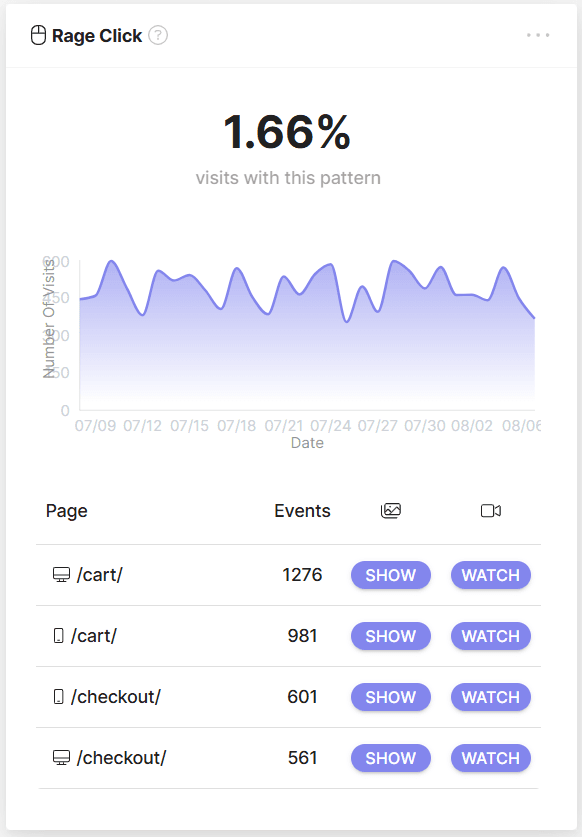
To understand what exactly triggers frustration in your visitors, you can view either the heatmaps or recordings of visits, during which a Rage Click was detected.
What is Rage Click on a Website? A Rage Click is when users keep clicking or tapping a part of a website (like a button, link, or image) because they're frustrated or annoyed or just want to make a quick interaction with a website like swiping images in a product gallery.
Why Do We Rage Click on a Website? Rage clicks occur when users repeatedly click on elements out of frustration, for example due to slow-loading pages, unresponsive features, confusing designs, or when rushing through tasks such as selecting multiple checkboxes or browsing an image gallery.
Why Should Website Owners Care About Rage Clicks? Rage Clicks can mean your users are having a bad time on your site, which might lead them to leave. It could also point to accessibility, usability, and technical problems.
Real-World Rage Clicking Example: Imagine someone's trying to buy something on a website, but they haven’t selected all the required product parameters, such as size or color. This may be because those features are hard to notice or the layout of the product page is misleading, and the user believes they made all selections. If after a few clicks on the 'Add to Cart' button, nothing happens, it's a clear sign of issues with the product selecting process. Frustrated, they might start rage-clicking the 'Add to Cart' button, getting more and more annoyed, and perhaps even giving up on the purchase altogether.