See what’s new
We gave the CUX app a fresh new look. Experience metrics widget got an upgrade: You can now click ‘View More’ to open a full list of all pages where the selected pattern occurred, complete with device type and event counts.
Check details in the video
Bounce back is registered when a user navigates to a page on a website and then quickly returns to a previous one.
Example:
In this example, you can see that Bounce Back happened in 4.01% of all visits. Below the graph you can identify the devices and pages responsible for the Bounce Back, along with the number of visits associated with this Experience Metric.
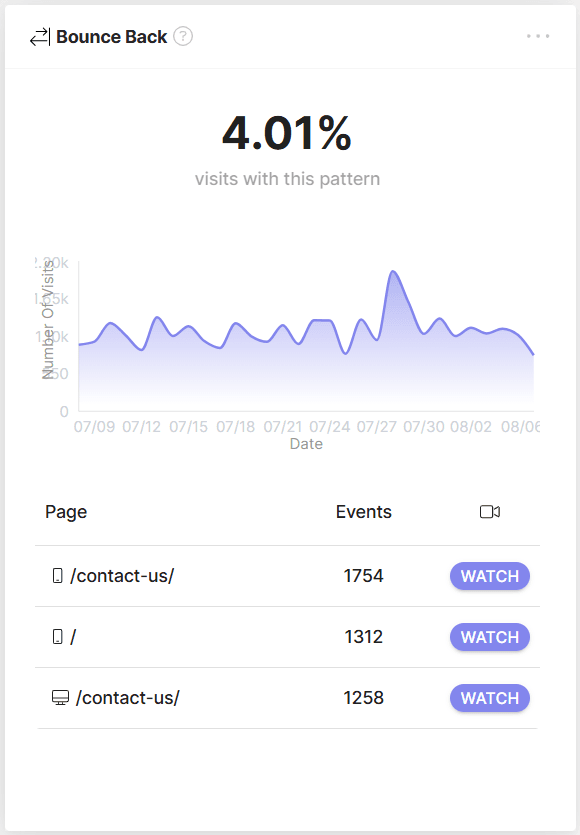
To understand the reason why your visitors had to bounce back from certain pages, view the recording of the visits by pressing “WATCH”.
What is Bounce Back on a Website? Bounce Back is an experience metric that sheds light on user interactions and their satisfaction with your website's content. This behavior occurs when a user visits one page on your website and quickly returns to a previous page. It's like someone entering a store, taking a few steps, and immediately turning around to exit. Why Do We Bounce Back on Websites? Bounce Backs can be triggered by various factors, including poor content relevance, slow loading times, or a lack of intuitive navigation.
Why Should Website Owners Care About Bounce Backs? This behavior is indicative of users encountering issues, dissatisfaction, or a lack of relevant information during their initial interaction. By analyzing Bounce Back rates, you can gain valuable insights into areas of your website that may require optimization, ensuring a more seamless and engaging user journey.
Real-World Bounce Back Example: Let's say you have a travel booking website, and a user opens a page for a popular vacation spot. However, after a few seconds, they click the "Back" button or use the website's navigation to return to the homepage. This bounce back behavior suggests that the user did not find the information or options they were looking for, possibly due to a confusing layout or insufficient details about the destination.