June 11, 2021
7 min read
Customer journey optimization: How to fix broken user flows and boost revenue
Most businesses want to improve the customer experience across all of their digital properties. Including websites, social media, blogs, and so on.

Kamila Kotowska
Head of Growth at cux.io

Customer journey optimization is more than just mapping. It's the act of using customer journey data to find and fix the specific digital touchpoints where users get stuck, creating a clear conversion path from first click to purchase.

When you want a fast health check on how your product’s interest is turning leads into sales, marketing funnels are useful theories, but the actual customer journey map is rarely linear. Real users loop back, open tabs, and get distracted across various digital touchpoints. All of which modify consumer wishes and intents.
In simpler words, you must keep your customer happy. And in order, to do that, the best way is to build a roadmap of the customer journey.
Here in this article, you would learn how to optimize customer journey with a roadmap. Also, can you believe that a chatbot can help your business in optimizing customer experience too? Are you wondering how? Scroll just a bit!
What is customer journey optimization
Before we dig a little deeper how to optimize customer journey let's have a quick chitchat about some fundamental definitions. At the stroke of what is customer journey optimization.
Customer journey optimization is the continuous process of analyzing user behavior to remove friction. Unlike simple CRO, which tweaks a single page, CJO aligns the entire lifecycle to improve the customer retention rate and maximize customer lifetime value.
8 steps to optimize customer journey
1. Align KPIs with user goals
Source
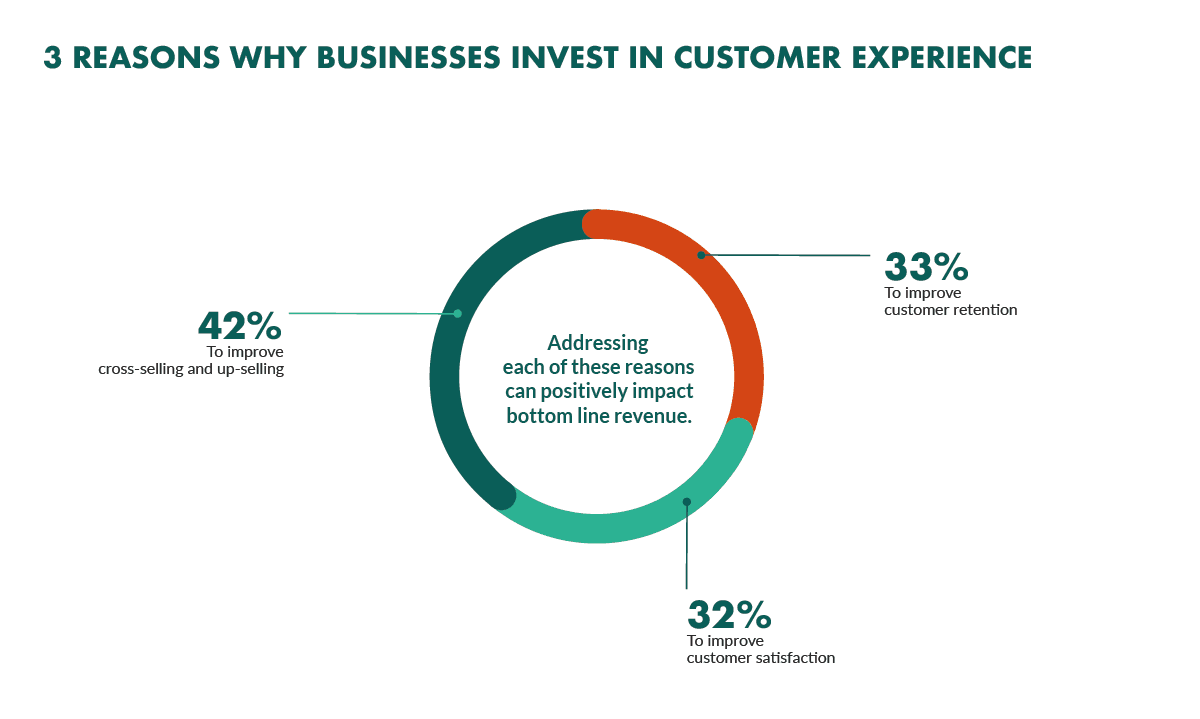
Here you are assisted to understand how customer journeys actually function. And what your customer value drivers are per touchpoint to discover your customers’ behavior.
After that, you will learn in determining the best touchpoints. This is how you can accomplish:
- Customer KPIs and operational KPIs should be mapped out
- Identifying the business processes that underpin the customer journey
2. Connect your data across touchpoints
In a unique method, we assist you in combining the mapping of your customer channel touchpoints with your back-end system operations. This leads to fact-based customer segment monitoring during actual customer journeys. Moreover, this leads to clear and validated insights about the potential for improvement in terms of efficiency, effectiveness, and compliance. And with the underlying core causes across the customer journey.
3. Recognize customer actions (not just page views)
You are assisted in determining how your consumers are truly “travelling” via your channels. And how they have interacted during their touchpoints through customer journey analysis. Also, you will be able to continuously optimize customer journey and achieve the best balance.
The balance between customer pleasure and process efficiency. And that too by combining fact-based insights from underlying business operations.
4. Enrich customer insights and refine customer segments
a) Personas Review:
The existing consumer profile and segmentation will undergo 4 stages. Naming, examination, completion, updating, and optimization as needed based on factual facts.
b) Design Target Customer Experience:
The experience model will undergo 3 stages. Naming, examination, updating, and adjusting as needed based on the consumer persona and segment analysis.
5. Compare the "planned" journey vs. reality
Compare your map to reality. Did users follow the conversion path you designed? If they dropped off, was it due to user frustration or a technical error?
6. Digital touchpoints: replan, reprioritize and ideate
Source
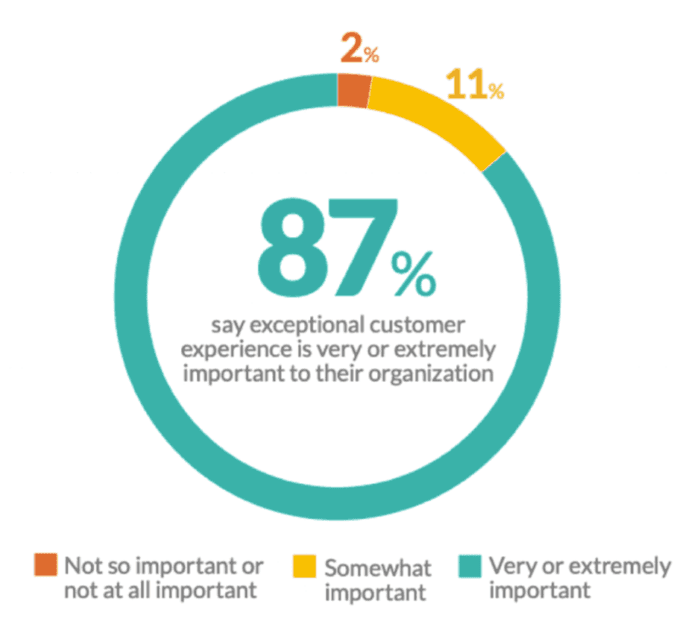
When it comes to improving customer experience, now is the time to think about new service offers and new service options that will help you deliver the desired experience.
In addition, assessing prospects and new services/offers necessitates the presence of supporting digital capabilities. Which are the necessary technologies, people, processes, and organizational elements in place to deliver the desired experience?
Following that, a digital capability map based on customer journey steps. In addition, that underlying capability is necessary to serve a client on their trip is created.
7. Map (digital) capabilities required for service delivery & the best experience
For ‘Customer First’ success, prioritize channels and touchpoints. What capabilities do you need to be able to achieve our ideal client experience?
8. Monitor continously with behavioral data
Your improvement roadmap should be built around a measurable and prioritized improvement agenda. However, continuous customer journey monitoring shifts process improvement efforts from “gut feel” to “fact-based,” leading to less opposition and greater control over value realization.
How chatbots fix gaps in customer journey
Source
A chatbot, by definition, is software that interacts with users using a conversational interface, whether written or voice-based. While most people identify bots with artificial intelligence (AI), they do not require AI to be useful and functional.
1. Smoother Customer Journey:
Customer Experience (CX) is all about improving interactions at multiple contact points along the CJ. Conclusion: When you use chatbots to solve immediate problems, you directly impact customer journey optimization. You are removing a roadblock in real-time.
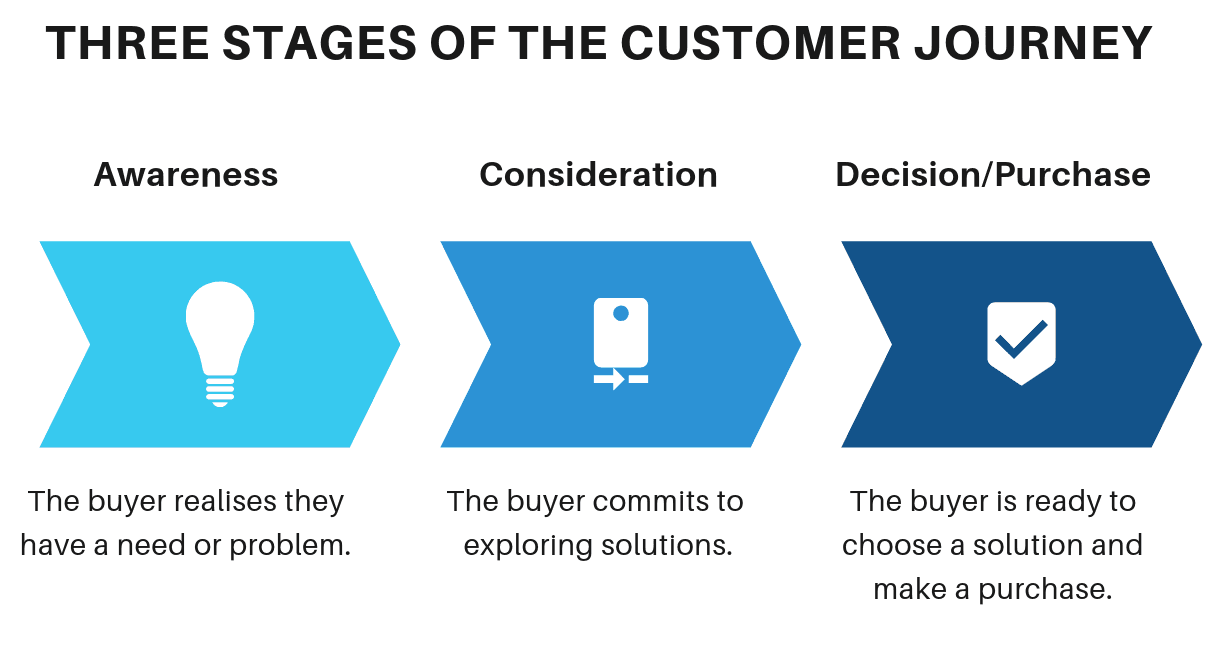
So, first and foremost, a chatbot can make the purchasing process much easier. Also, there are two touchpoints in this segment of the customer journey optimization where bots can have a substantial impact: the awareness and evaluation stages.
2.Real-Time Personalization:
In terms of the consumer experience, personalization is key. The ability of bots to customize client experiences in real-time is the second advantage they bring to the table.
In other words, any information the consumer provides during the chat (or numerous interactions) is immediately available to the bot. Moreover, this capacity goes much beyond simply addressing the user by name.
3. Be Available 24/7:
Your live chat customer service crew requires rest. Your chatbot, on the other hand, does not. Outside of formal business hours, numerous requests and transactions occur. When your customer service crew is unavailable, customers need a way to get help.
4. Collect Actionable Feedback:
Any company’s ability to collect feedback is critical. It’s critical to understand how your consumers feel about your product/service and the support you provide if you want to be successful.
Based on feedback especially negative feedback you can easily find space and elements to optimize Customer Journey. It's a win-win solution.
_
Alishba Memon is a content writer at Botsify. She is a staunch believer in the theory of making anything happen. She specializes in SEO writing and content writing. Not only that, but she aims to spring up in a pragmatic way. Find out where your users are actually dropping off.
Don't rely on a theoretical map.
Start analyzing your Customer Journey
Frequently Asked Questions (FAQ)
Q: What is the difference between Customer Journey Mapping and Optimization?
A: Customer Journey Mapping is drawing the map (the theory). Customer Journey Optimization is fixing the road (the practice). Mapping visualizes where you think users go; optimization uses customer journey data to remove friction and speed up the user flow based on what they actually do.
Q: What tools do I need for customer journey optimization?
A: You need a combination of quantitative and qualitative tools. Tracking website analytics (like GA4) tells you where users leave. Behavioral analytics tools (like CUX) show you why—letting you watch visit recordings to see the specific obstacle that stopped the journey.
Q: How does optimization affect Customer Lifetime Value (CLV)?
A: By removing user frustration from the journey, you make buying easier. A smooth, optimized experience builds trust, which increases the customer retention rate—the biggest driver of high Customer Lifetime Value (CLV).