February 25, 2020
3 min read
High traffic, zero sales: How T-Mobile saved budget using CUX
T-Mobile - as one of the largest mobile operators in Poland and the world – cannot afford a lack of media presence.

Paulina Walkowiak
Co-founder and CEO at cux.io

Standard metrics can hide low-quality traffic. See how T-Mobile used qualitative user behavior analysis to detect users hidden in background tabs, protecting their budget and campaign orchestration strategy.
TL;DR – The efficiency blueprint:
The Anomaly: An affiliate campaign showed great traffic numbers but near-zero conversions.
The Missing Link: Standard analytics showed "time on site" was fine, masking the lack of real interest.
The Behavioral Insight: CUX analysis revealed users weren't looking at the page; it was opened in background tabs to inflate CPC costs.
The Result: T-Mobile identified the artificial traffic and cut the wasted spend immediately.
The suspicious signal: High traffic but zero conversions
In our previous article, we described the situation of T-Mobile using behavior analytics with cux.io to successfully detect the reason for a sudden decrease in conversion rate in one of its campaigns.
However, this was not the only case in which CUX proved to be a salutary solution for T-Mobile. Here’s another example. This time an affiliate network was providing advertising services for the operator. At some point, it turned out, that one of the affiliates was not delivering the targets set at the start.
The traffic from the campaign seemed to be right – increasing, the time of the visits implied that the users were real, but the conversion level was definitely not satisfying. Something was clearly not working. This prompted T-Mobile to audit their campaign orchestrations to uncover the underlying issues.
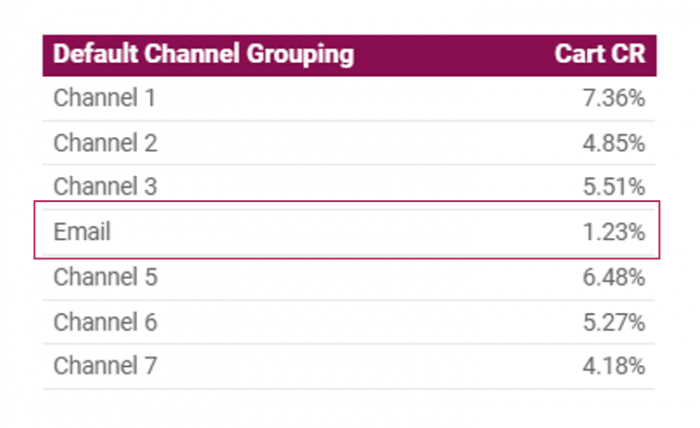
Was is a weak offer? A broken conversion path? Or maybe this is not the best source of traffic? At that point of the campaign, a decision could well be made, based on reading the tea leaves.
Auditing traffic quality with behavioral data
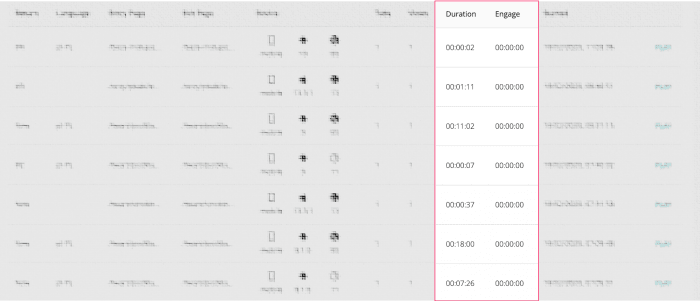
Thankfully, T-Mobile decided to look into CUX, watch several visit recordings and verify the situation. Visit recordings showed, that most of the visits from the above-mentioned affiliate’s campaigns were opened in the background tab and the time spent on the site was negligible. Because of that, chances for conversion were close to zero.
Conclusion: Optimizing cost per acquisition (CPA)
Solving this puzzle was possible thanks to the unique indicators available in CUX digital experience analytics platform. In our qualitative analytics tool, you can see, whether the site is currently being viewed by the customer or it is open in the background.
You can also check the so-called ‘engagement time’, i.e. the time that the user spends actively on your website. Thanks to these indicators, T-Mobile discovered that the affiliate was smart enough to open pages in order to inflate the cost of the campaign, which was implemented in the CPC (cost per click) model.
This revelation emphasized the importance of campaign monitoring in ensuring the integrity and effectiveness of online advertising efforts.
The most optimized landing page in the world cannot increase the conversion rate of a background tab. T-Mobile proved that customer journey optimization fails if the customer isn't real; filtering out fake traffic was the single biggest step to restoring their campaign's ROI.
By using behavioral data to verify traffic quality, they stopped paying for "ghosts" and refocused their budget on users who were actually looking at the screen.